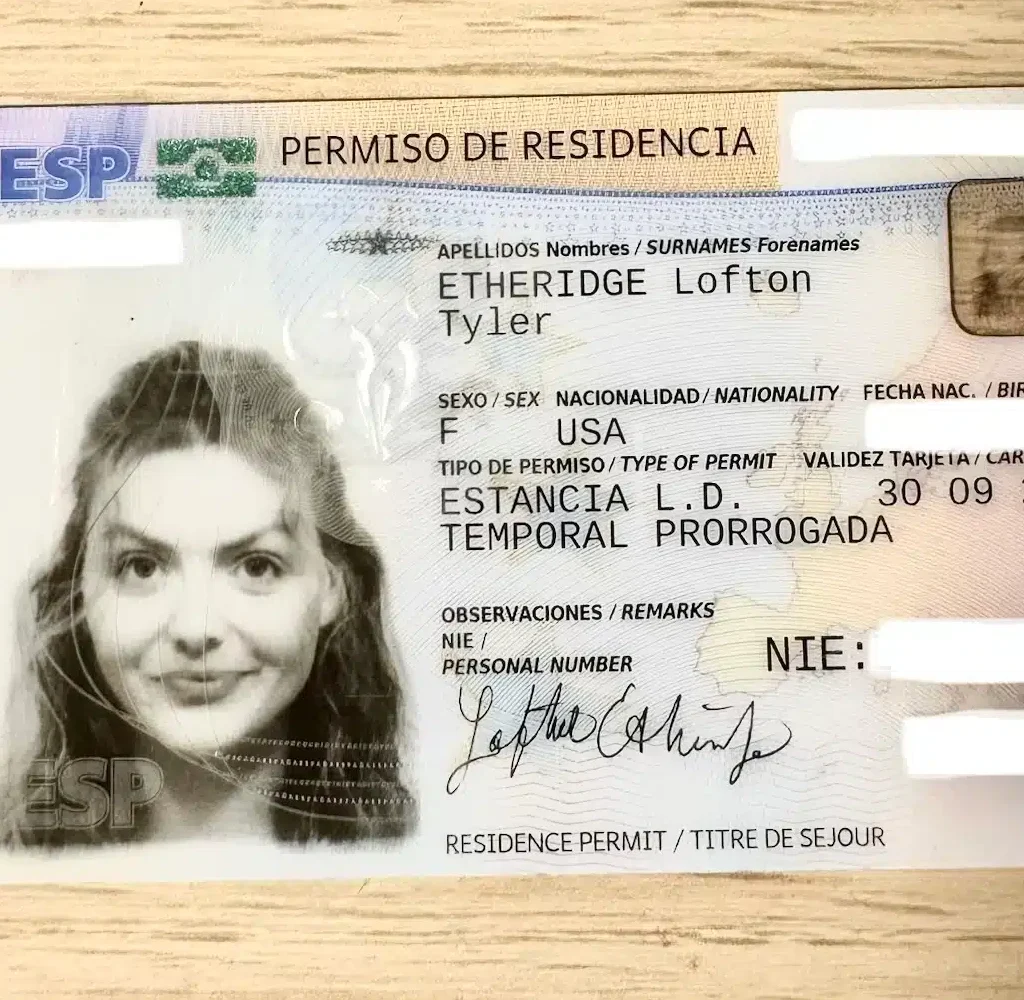







Getting an Autorización de Regreso in Valencia? You’re in luck! Read this blog to find out why -> How to Apply for an Autorización de Regreso in Valencia: By Email
If you’re an auxiliar or expat in Spain and planning to travel outside the country while your TIE renewal is still processing, chances are you’ve heard of the infamous Autorización de Regreso. Also known as the little paper that stands between you and an unnecessary airport meltdown. When I first heard about it, I thought, “Surely my resguardo receipt is enough.” Spoiler alert: it’s not!
So let’s break down what the Autorización de Regreso actually is, who needs it, how to get it, and what to bring to your appointment. Because if there’s one thing Spain loves almost as much as café con leche, it’s paperwork.
What is an Autorización de Regreso?
An Autorización de Regreso is a temporary travel authorization that allows non-EU residents in Spain to leave and re-enter the country while their residency renewal is still being processed. In simpler terms: If your TIE card is expired or currently being renewed, this document acts like a temporary “permission slip” to come back into Spain. Without it, re-entering Spain can become very complicated, especially if:
- your TIE is expired
- your new card hasn’t arrived yet
- or you only have the renewal receipt (resguardo)
Who usually needs one?
Most commonly, anyone renewing their TIE, students renewing residency, and people waiting on a new physical TIE card. Especially during summer when everyone suddenly realizes: “Oh right… I booked an international trip.”
Do You Need A Regreso?
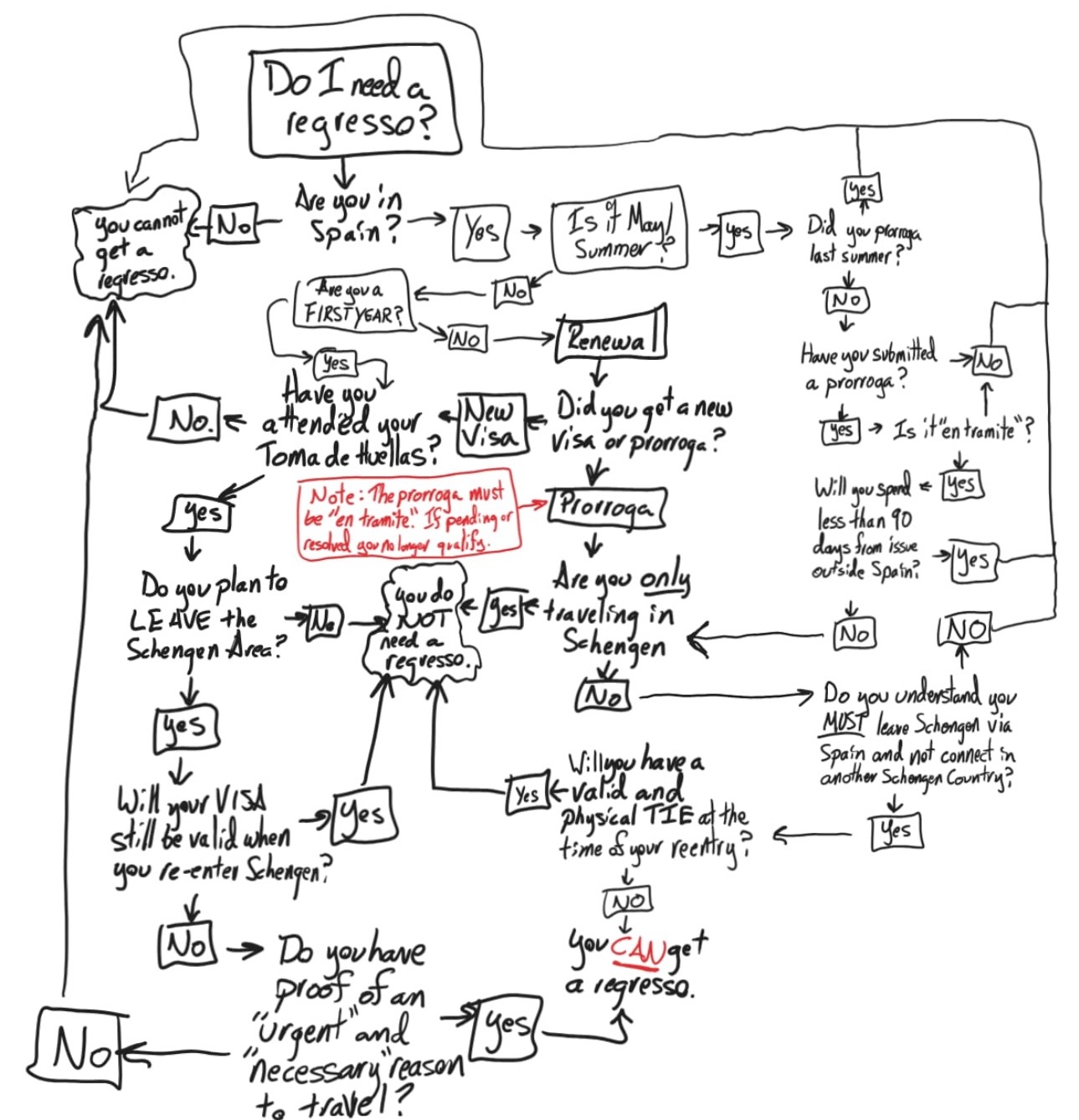
***Flowchart thanks to Nicholas Thomas Lansing
Important: It varies by city and region
Spain is technically one country, but administratively, sometimes it feels like 17 different personalities. The process can vary depending on your city, your province, your police office, and, honestly, sometimes the mood of the office that day. Some places are stricter than others about:
- appointments
- document copies
- translations
- proof of travel
- timing
So always double-check your local extranjería or police station requirements.
Step 1: Book an appointment
Before anything else, you’ll usually need a cita previa (appointment). This is typically booked through the official government appointment website. The appointment category is often something like “Policía – Autorización de Regreso.” Depending on your city, appointments can:
- disappear instantly
- open randomly
- or become available late at night, like concert tickets
Spain will really humble you.
Step 2: Gather your documents
While requirements can vary, these are the documents most people are asked to bring:
- EX-13 form (completed and signed)
- Proof of payment for Modelo 790, código 012
- Passport copy (ID page + visa page)
- Proof that your TIE renewal is in process (resguardo)
- Flight reservations (yes, they want dates)
- A short explanation of why you’re traveling
Step 3: Attend the appointment
At your appointment, arrive early, bring copies of everything, and keep your documents organized. The appointment itself is usually pretty quick if you have all the paperwork ready. If approved, you may receive the document the same day or return later to pick it up. Depends entirely on the office.
How long is it valid?
Typically, the Autorización de Regreso is valid for up to 90 days, but always check the exact dates listed on your document. Do not assume! Spain loves dates, stamps, and technicalities.
FAQ: Can I travel within the Schengen Zone on an expired TIE?
I’m not going to give you a straight yes or no answer because legally, you’re generally not supposed to travel with an expired TIE. However, I’ll be honest and say that I have traveled within the Schengen Zone before while my TIE was expired, and didn’t run into issues. (If any border agents are reading this, that was obviously a joke.)
That being said, I truly think it depends on the country and the specific border controls you encounter. Some countries are much stricter than others when it comes to checking residency documents, while others barely glance at them. At the end of the day, there is always some level of risk involved, so it’s important to do your own research, ask around, and make the decision carefully before potentially jeopardizing your residency situation in Spain.
BUT if you are traveling outside the Schengen Zone, you WILL NEED an Autorización de Regreso.
The Autorización de Regreso sounds intimidating at first, but once you understand the process, it’s really just another Spanish bureaucracy side quest. The biggest advice I can give is don’t wait until the last minute, double-check your city’s requirements, and keep both digital and printed copies of everything. Because in Spain, having “just one more copy” somehow always ends up being the correct decision. Every. Single. Time.
For more information on the Autorización de Regreso, read this blog -> What to Bring to Your “Regreso” Appointment: Guide + checklist (If applicable)
Love always,
American Girl Meets World